April 14, 2011

Student Loan Insurance

What happens when a student drops out of college without finishing his/her degree?

Well, nothing. However, there is a high percentage that said student will have to pay back thousands of dollars in student loans. This prospect is daunting even for those with decent jobs, let alone a college dropout. Student debts- a long term financial burden with no utility that is almost impossible to shed.

http://www.insidehighered.com/blogs/confessions_of_a_community_college_dean/dropouts_with_loans

The link above is from Inside Higher Education. The columnist proposed a possible solution to the growing number of people who drop out after taking student loans. He proposed for a change in public systems: that they charge less for the earlier semesters and more for the later ones.

Statistically, one-third of all college students drop out eventually. Some find it unenjoyable, others find it simply not worth the effort and also, commitment issues.

The possible solution: The creation of an insurance market that rewards students every year that they return to school to finish their degrees. A student loan insurance market would increase the number of undergrads finishing their degree by 3.8%, with greater effects for students who are currently more likely to drop out.

Now, there is a catch to this. It has the same problems that affect every insurance market, that is, people don't buy insurance unless they think they need it.


(Source: http://papers.ssrn.com/sol3/papers.cfm?abstract_id=1532391
Satyajit Chatterjee at the Federal Reserve Bank of Philadelphia and Felicia Anamaria Ionescu at Colgate University)

The authors acknowledge as much, writing:
Optimal insurance never encourages anyone who was putting in effort in college to stop putting in effort. Indeed, it encourages people who were not putting in effort to put in effort. The friction is simply that some students who were choosing to drop out may choose to continue on in college without putting in effort (there is no change in their college effort decision). Thus, insurance attracts students whose failure probability is 1.
 i.e. Insurance encourages people who were not putting in effort to put in effort, however some students who originally chose to drop out may continue their 'studies' without putting in any effort.

---

Insurance is a form of risk management to defend against the risk of a loss. Agreeing to the terms of an insurance policy creates a contract between the insurer and the insured. Insurance is designed to protect the financial well-being of an individual or a corporation in a case of unexpected events.

April 12, 2011

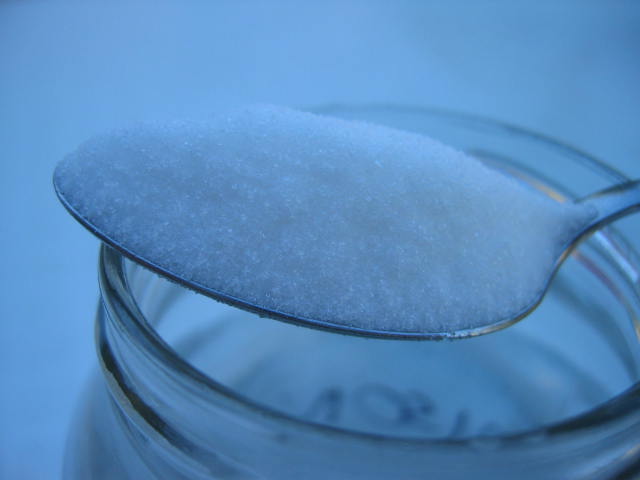
Sweet Poison -Part 2-

In America, because of the high price of cane sugar, manufacturers use fructose extracted from corn, which is better known industrially as HFCS(High Fructose Corn Syrup). The price of corn is cheaper due to it being subsidised by the government of America. Although HFCS is commonly called fructose, in reality it is a fusion of fructose and glucose in the approximate ratio of 50:50.

The excessive intake of HFCS in America is said to be the leading cause of obesity in the realm. According to the American Medical Association, HFCS contributes more to obesity than sucrose or normal cane sugar.

Obesity is among the effects of excessive intake of sugar. This phenomenon is much clearer in the United States, the country where the people enjoy carbonated drinks with high sugar content. According to research, in the 1970s, Americans take 9 teaspoons of sugar daily, which is elevated to 14 teaspoons by the '90s.
C12H22O11 Sucrose

Research is being carried out for the search of alternative sugars to reduce the intake of cane sugar by the people of the world. Curculin is an alternative sugar that is extracted from the Lumbah plant only found in Malaysia. The Lumbah tree is a herbal plant with fruits in bunches. The fruit of the Lumbah tree is white and is bland in taste. However, miraculously, after eating one of the fruits, the taste of everything else is altered drastically. This taste-modifying activity is also exhibited in miraculin. Curculin is a high intensity sweetener with a reported relative sweetness of 430-2070 times sweeter than sucrose on a weight basis.

Sugar is amongst the essentials of life. However, the sweetness of sugar, in excess, may turn into poison. Diabetes is a silent killer, ever waiting in the shadows, and has taken many lives to its name.

Please, reduce your sugar intake. Moderation is the answer.

April 9, 2011

Sweet Poison. -Part I-

After having something spicy or oily, our bodies crave for dessert, demanding something sweet like pastries, ice-cream or even just mere fruits. The keyword here is 'addiction'. Yes, my friend, all of us are addicted to the taste of sweetness.

Like all other drugs, when digested in the body, sugar activates the receptors in the body, thus triggering the release of dopamine. Dopamine increases blood pressure and heartbeat rate, creating a happiness sensation and the feeling of ecstasy.

However, this creates a sort of addiction towards this release of dopamine, therefore we take in more sweets than we should have to satisfy the addiction. We need to resist the urge, the crave for monosaccharides, disaccharides, or oligosaccharides. The discovery of the effect of the sugar is discussed in detail in the research of Dr. DesMalsons in her book Potatoes not Prozac: Solutions for Sugar Sensitivity.

There are quite a number of other research projects that warn us regarding the addiction to sugar. Scientifically, sugar gives a neurochemical reation which lights the way- opens the door for other, more severe drugs.

The sweetness of sugar is comparable to the high one gets off cocaine. (Bordeaux University, France) The lab rats are given a choice: Sugar, or Cocaine? Surprisingly, all of them picked sugar, which releases more dopamine and the feeling of euphoria.

The intake of sugar as cocaine brings about a plethora of negative effects on the body. To satisfy the needs of the flesh, one takes more and more sugar, leading to an over-excessive intake of sugar and is potentially lethal.